The human condition encompasses the unique features of being human. It can be described as the irreducible part of humanity that is inherent and not dependent on factors such as gender, race or class. (Wikipedia)
When it comes to maintaining sanity, forgetting is at least as important as remembering. Without it, the constant stream of stimuli–faces on the street, words read, items glanced at–would quickly overwhelm the mind. But the neural basis underlying the act of forgetting isn't well understood. A new study found that in roundworms, a protein called musashi is actively involved in forgetting. Just in time for the 10th anniversary ofEternal Sunshine of the Spotless Mind.
In the study, published in the journal Cell, scientists found that roundworms that were genetically modified to lack the musashi protein did much better on a smell-based learning task, actively retaining memories 24 hours later that unmodified mice did not. This is one of the first studies to show that forgetting can be an active (as opposed to passive) process, the authors wrote. Further analysis found that the protein impedes the production of molecules that stabilize synapses, which are connections between neurons involved in forming and holding onto memories. The study also showed that another protein called adducin stimulates the growth of synapses, helping to retain memory. The balance between these competing processes determines which memories are held onto. “An imbalance in any of these mechanisms may result in altered memory function that could play a role in memory-related disorders” in humans, the study concluded. While it’s too early to make the leap to humans, these proteins could be important targets for research into pharmaceuticals to treat Alzheimer’s disease and the like.
In the developed world, we live in the most peaceful, healthful time
in history. The murder and violent crime rate is dropping; we are
vaccinated against the most deadly diseases of previous generations; our
houses protect us from most storms; relatively few people go hungry.
The average lifespan is longer than it has ever been. Then why do we
walk around so anxious, so full of fear? The answer is not terrorists,
TV, Republicans, or Democrats. The answer is our legacy of ancient
fears, the result of having spent millions of years running from
predators. Our fear response is more influenced by the ancient species
we struggled to escape than any modern challenges. We live in a demon-haunted world.
Until not that many generations ago, Homo sapiens and our
primate ancestors found shelter under lean-tos, in caves, and up among
branches. Exposed and relatively defenseless, our predecessors stood a
good chance of being eaten by bigger, badder, species. For most of our
evolutionary history as primates, we were far more likely to play the
role of Big Mac than Big Man on Campus. Our ancestors evolved many
traits to help them escape that fate—if not forever, at least long
enough to reproduce and pass their genes along. These responses still
frame how our bodies work today, which would be great if we were still
being stalked by large cats. But Vegas performers notwithstanding, most
of us are not.
Nor was it just cats. Humans were eaten by giant hyenas, cave bears,
cave lions, eagles, snakes, other primates, wolves, saber-toothed cats,
false saber-toothed cats, and maybe even—bless their hearts—giant, predatory kangaroos.
Amazingly, these are just the predators that consumed our ancestors
during relatively recent history, the past 100,000 years or so. Go
further back in time, and the diversity of things that ate our kin goes
up (particularly given that our earlier, pre-hominin
ancestors were progressively smaller). Some predators, such as
leopards, ate many of our ancestors. Others, like crocodiles, komodo
dragons, or sharks, took their bites, but more opportunistically,
savoring the occasional human or proto-human the way one might enjoy
some special holiday treat. We were, in other words, their thanksgiving
turkey.
In those few places where large predators are still common, primates,
especially cute baby ones, are eaten with great frequency and alacrity.
When our species evolved, human children were special only in as much
as their hairlessness made them slightly easier to digest. Even today,
where humans live alongside predators, both children and adults get
eaten. Harry Greene, a herpetologist at Cornell University and one of a
handful of my colleagues more likely to be eaten by a wild animal than
to die of old age, and Thomas Headland, an anthropologist, recently
conducted a study of Agta hunter-gatherers in the Philippines. Harry was
excited to find that the Agta lived among a high density of pythons.
The Agta tend to be not quite so excited; Greene and Headland found that
one in four Agta men had been attacked by a reticulated python.
Of the 120 men whose stories were considered for the study, six had
been killed by a python. That’s a death-by-python rate of 1 in 20. Those
are lousy odds, but most of us have escaped such risks by living in
houses and cities and living where our ancestors killed off the most
dangerous predators, be they tigers, cave bears, or giant, carnivorous
kangaroos. We should be grateful for having escaped—and yet we haven’t
really escaped, because our bodies are burdened by our long history of
trying to get away.
When our hamburger-size ancestors lived in trees, it was
extraordinarily valuable to be able to respond immediately to the
potential presence of a predator. Many primate species have alarm calls
that are specific for different predators. The first primate nouns
were almost certainly those embedded in calls that meant, “Oh shit, big
cat!” “Oh shit, giant eagle!” or “For the love of god, did you see the
size of that snake?” In this way, predators may have had a positive
impact on who we are now, having given us the precursors of language, or
at the very least, cussing.
In addition to inventing words for these predators, we also responded
in other ways. When we saw or heard a sign of danger—a movement in the
grass, a strange shadow—hormonal reactions screamed out inside our
bodies. These fight-or-flight responses sped up the heart, increased
blood flow to muscles, caused hyperventilation (to get more oxygen for
quick reaction), and made us more likely to respond quickly to a
predator by searching for it, hiding, running away, or for the truly
brave, throwing a stick and then running away.
These fight-or-flight signals and associated jumpiness and anxiety
are part of the problem in modern urban life, part of our discontent.
They are triggered by all sorts of ordinary activities. Thinking of
taxes causes our hearts to beat fast. So does being late for a meeting,
forgetting your homework, or contemplating how to pay for a home
improvement. In none of these cases does our fight-or-flight response
serve a purpose. It gets us agitated. It makes our heart beat faster. It
prepares us to run, but to where? To what end?
Right now there are anxious people all around you, ready to run from
predators that aren’t there. Our misplaced anxiety can seem silly (the
other day I just about melted down while trying to find my keys so that I
could drive to the gym, where I was planning to run in place). But it
is still a serious problem that can cost money and can cost lives. We
have resolved this plague in part by medicating. Xanax, Valium. and
other drugs help. “There are no more leopards,” the little pills say,
and we rest more easily.
Anxiety is just one lingering result of predators’ influence. Another
is, well, tingly. When you are spooked by a sound or a testy boss, the
hair on your arms stands up. Along with the upright hair come chills.
But why does this happen? Once upon a time, when we still had fur, when
our hair stood on end it made us look bigger, less like a Big Mac and
more like, well, something slightly larger than a Big Mac. But now that
we have lost most of our hair, the chills that run through our body and
the contraction of the tiny muscles in our skin that pull our hair
erect simply make us look ridiculous, more cowardly than bold.
Many traits that influenced our ability to spot predators or flee
from them have been under strong natural selection for much of the past
40 million years of primate evolution and even before then. (We have
been prey essentially since the beginning.) Researchers are just
beginning to explore these possibilities. Lynne Isbell at the University
of California-Davis has argued that the range of our color vision evolved
in part because those of our ancestors who could see more colors were
more likely to spot snakes. A study this year found that children spot snakes more quickly than they do flowers
. They also spot snakes when using color vision more quickly than in
gray scale. Our interactions with other species (be they snakes, or as
some have argued, fruits) shaped our eyesight. Our screams, those
preverbal (and universal) utterances, are alarm calls signaling,
simultaneously, both a threat and the need for help.
But it wasn’t just predators that influenced our evolution. Parasites
and pathogens have also shaped our bodies in ways that are affecting
you now. With predators, most of our adaptations relate to avoiding
encounters in the first place, for the simple reason that by the time we
encounter a predator, it tends to be too late. But once we are attacked
by parasites, we often still stand a chance. Among the deadliest
parasites in human history are those carried body-to-body by mosquitoes,
such as the malaria parasite. Those ancestors who lived in areas where
malaria was and is most problematic evolved responses to escape Plasmodium’s
deadly wrath. One adaptation puts people at an increased risk of
sickle-cell anemia, and another raises the risk of favism, a condition
in which consuming fava beans causes anemia. Even the relative
prevalence of different blood types has been argued to be a consequence
of Plasmodium’s influence; some blood types appear to be more resistant to malaria than others.
Lice and other parasites and the diseases they carry may have played a
role in our loss of hair; parasites now have fewer places to hide.
Parasites might have played a role in our original sociality, too,
having brought us together to pick lice off one another’s backs (and
feel the endorphin release and social appeasement
that rewards such behavior). Then there are the parasitic worms whose
presence may have shaped our immune systems to such an extent that some
of us miss their absence; autoimmune disorders—including Crohn’s disease
and asthma—have been linked to now-obsolete adaptations to keep these
worms in check.
How our bodies work (or fail to work) in modern environments relates
not to the species we confront now, but the collective effect of the
species we confronted over millions of years. We are left with the
bodies that were best able to survive despite the daily threat of being
eaten by a predator, sickened by a parasite or pathogen, or otherwise
assaulted by Mother Nature’s well-armed hordes. Of course, we are still
evolving. In every generation, some genes are favored relative to
others, and yet the rate of our evolution is slow relative to how much
we have changed. And so we go on getting anxious when our football team
loses and letting our hair stand on end, ridiculously, when we are
scared. We could bemoan these legacies, but it makes more sense to
confront them head on, to consider just how we should live not in light
of the bodies we wish we had but instead with the ones we are born with,
bodies that evolved in the wild, thanks to ancestors who only just
barely got away.
It afflicts us all. Because confidence in our own judgments is part of being human.
By
DANIEL KAHNEMAN
Published: October 19, 2011
Many decades ago I spent what seemed like a great deal of time under a
scorching sun, watching groups of sweaty soldiers as they solved a
problem. I was doing my national service in the Israeli Army at the
time. I had completed an undergraduate degree in psychology, and after a
year as an infantry officer, I was assigned to the army’s Psychology
Branch, where one of my occasional duties was to help evaluate
candidates for officer training. We used methods that were developed by
the British Army in World War II.
One test, called the leaderless group challenge, was conducted on an
obstacle field. Eight candidates, strangers to one another, with all
insignia of rank removed and only numbered tags to identify them, were
instructed to lift a long log from the ground and haul it to a wall
about six feet high. There, they were told that the entire group had to
get to the other side of the wall without the log touching either the
ground or the wall, and without anyone touching the wall. If any of
these things happened, they were to acknowledge it and start again.
A common solution was for several men to reach the other side by
crawling along the log as the other men held it up at an angle, like a
giant fishing rod. Then one man would climb onto another’s shoulder and
tip the log to the far side. The last two men would then have to jump up
at the log, now suspended from the other side by those who had made it
over, shinny their way along its length and then leap down safely once
they crossed the wall. Failure was common at this point, which required
starting over.
As a colleague and I monitored the exercise, we made note of who took
charge, who tried to lead but was rebuffed, how much each soldier
contributed to the group effort. We saw who seemed to be stubborn,
submissive, arrogant, patient, hot-tempered, persistent or a quitter. We
sometimes saw competitive spite when someone whose idea had been
rejected by the group no longer worked very hard. And we saw reactions
to crisis: who berated a comrade whose mistake caused the whole group to
fail, who stepped forward to lead when the exhausted team had to start
over. Under the stress of the event, we felt, each man’s true nature
revealed itself in sharp relief.
After watching the candidates go through several such tests, we had to
summarize our impressions of the soldiers’ leadership abilities with a
grade and determine who would be eligible for officer training. We spent
some time discussing each case and reviewing our impressions. The task
was not difficult, because we had already seen each of these soldiers’
leadership skills. Some of the men looked like strong leaders, others
seemed like wimps or arrogant fools, others mediocre but not hopeless.
Quite a few appeared to be so weak that we ruled them out as officer
candidates. When our multiple observations of each candidate converged
on a coherent picture, we were completely confident in our evaluations
and believed that what we saw pointed directly to the future. The
soldier who took over when the group was in trouble and led the team
over the wall was a leader at that moment. The obvious best guess about
how he would do in training, or in combat, was that he would be as
effective as he had been at the wall. Any other prediction seemed
inconsistent with what we saw.
Because our impressions of how well each soldier performed were
generally coherent and clear, our formal predictions were just as
definite. We rarely experienced doubt or conflicting impressions. We
were quite willing to declare: “This one will never make it,” “That
fellow is rather mediocre, but should do O.K.” or “He will be a star.”
We felt no need to question our forecasts, moderate them or equivocate.
If challenged, however, we were fully prepared to admit, “But of course
anything could happen.”
We were willing to make that admission because, as it turned out,
despite our certainty about the potential of individual candidates, our
forecasts were largely useless. The evidence was overwhelming. Every few
months we had a feedback session in which we could compare our
evaluations of future cadets with the judgments of their commanders at
the officer-training school. The story was always the same: our ability
to predict performance at the school was negligible. Our forecasts were
better than blind guesses, but not by much.
We were downcast for a while after receiving the discouraging news. But
this was the army. Useful or not, there was a routine to be followed,
and there were orders to be obeyed. Another batch of candidates would
arrive the next day. We took them to the obstacle field, we faced them
with the wall, they lifted the log and within a few minutes we saw their
true natures revealed, as clearly as ever. The dismal truth about the
quality of our predictions had no effect whatsoever on how we evaluated
new candidates and very little effect on the confidence we had in our
judgments and predictions.
I thought that what was happening to us was remarkable. The statistical
evidence of our failure should have shaken our confidence in our
judgments of particular candidates, but it did not. It should also have
caused us to moderate our predictions, but it did not. We knew as a
general fact that our predictions were little better than random
guesses, but we continued to feel and act as if each particular
prediction was valid. I was reminded of visual illusions, which remain
compelling even when you know that what you see is false. I was so
struck by the analogy that I coined a term for our experience: the
illusion of validity.
I had discovered my first cognitive fallacy.
Decades later, I can see many of the central themes of
my thinking about judgment in that old experience. One of these themes
is that people who face a difficult question often answer an easier one
instead, without realizing it. We were required to predict a soldier’s
performance in officer training and in combat, but we did so by
evaluating his behavior over one hour in an artificial situation. This
was a perfect instance of a general rule that I call WYSIATI, “What you
see is all there is.” We had made up a story from the little we knew but
had no way to allow for what we did not know about the individual’s
future, which was almost everything that would actually matter. When you
know as little as we did, you should not make extreme predictions like
“He will be a star.” The stars we saw on the obstacle field were most
likely accidental flickers, in which a coincidence of random events —
like who was near the wall — largely determined who became a leader.
Other events — some of them also random — would determine later success
in training and combat.
You may be surprised by our failure: it is natural to expect the same
leadership ability to manifest itself in various situations. But the
exaggerated expectation of consistency is a common error. We are prone
to think that the world is more regular and predictable than it really
is, because our memory automatically and continuously maintains a story
about what is going on, and because the rules of memory tend to make
that story as coherent as possible and to suppress alternatives. Fast
thinking is not prone to doubt.
The confidence we experience as we make a judgment is not a reasoned
evaluation of the probability that it is right. Confidence is a feeling,
one determined mostly by the coherence of the story and by the ease
with which it comes to mind, even when the evidence for the story is
sparse and unreliable. The bias toward coherence favors overconfidence.
An individual who expresses high confidence probably has a good story,
which may or may not be true.
I coined the term “illusion of validity” because the confidence we had
in judgments about individual soldiers was not affected by a statistical
fact we knew to be true — that our predictions were unrelated to the
truth. This is not an isolated observation. When a compelling impression
of a particular event clashes with general knowledge, the impression
commonly prevails. And this goes for you, too. The confidence you will
experience in your future judgments will not be diminished by what you
just read, even if you believe every word.
I first visited a Wall Street firm in 1984. I was there
with my longtime collaborator Amos Tversky, who died in 1996, and our
friend Richard Thaler, now a guru of behavioral economics. Our host, a
senior investment manager, had invited us to discuss the role of
judgment biases in investing. I knew so little about finance at the time
that I had no idea what to ask him, but I remember one exchange. “When
you sell a stock,” I asked him, “who buys it?” He answered with a wave
in the vague direction of the window, indicating that he expected the
buyer to be someone else very much like him. That was odd: because most
buyers and sellers know that they have the same information as one
another, what made one person buy and the other sell? Buyers think the
price is too low and likely to rise; sellers think the price is high and
likely to drop. The puzzle is why buyers and sellers alike think that
the current price is wrong.
Most people in the investment business have read Burton Malkiel’s wonderful book “A Random Walk Down Wall Street.”
Malkiel’s central idea is that a stock’s price incorporates all the
available knowledge about the value of the company and the best
predictions about the future of the stock. If some people believe that
the price of a stock will be higher tomorrow, they will buy more of it
today. This, in turn, will cause its price to rise. If all assets in a
market are correctly priced, no one can expect either to gain or to lose
by trading.
We now know, however, that the theory is not quite right. Many
individual investors lose consistently by trading, an achievement that a
dart-throwing chimp could not match. The first demonstration of this
startling conclusion was put forward by Terry Odean, a former student of
mine who is now a finance professor at the University of California,
Berkeley.
Odean analyzed the trading records of 10,000 brokerage accounts of
individual investors over a seven-year period, allowing him to identify
all instances in which an investor sold one stock and soon afterward
bought another stock. By these actions the investor revealed that he
(most of the investors were men) had a definite idea about the future of
two stocks: he expected the stock that he bought to do better than the
one he sold.
To determine whether those appraisals were well founded, Odean compared
the returns of the two stocks over the following year. The results were
unequivocally bad. On average, the shares investors sold did better than
those they bought, by a very substantial margin: 3.3 percentage points
per year, in addition to the significant costs of executing the trades.
Some individuals did much better, others did much worse, but the large
majority of individual investors would have done better by taking a nap
rather than by acting on their ideas. In a paper titled “Trading Is Hazardous to Your Wealth,”
Odean and his colleague Brad Barber showed that, on average, the most
active traders had the poorest results, while those who traded the least
earned the highest returns. In another paper, “Boys Will Be Boys,”
they reported that men act on their useless ideas significantly more
often than women do, and that as a result women achieve better
investment results than men.
Of course, there is always someone on the other side of a transaction;
in general, it’s a financial institution or professional investor, ready
to take advantage of the mistakes that individual traders make. Further
research by Barber and Odean has shed light on these mistakes.
Individual investors like to lock in their gains; they sell “winners,”
stocks whose prices have gone up, and they hang on to their losers.
Unfortunately for them, in the short run going forward recent winners
tend to do better than recent losers, so individuals sell the wrong
stocks. They also buy the wrong stocks. Individual investors predictably
flock to stocks in companies that are in the news. Professional
investors are more selective in responding to news. These findings
provide some justification for the label of “smart money” that finance
professionals apply to themselves.
Although professionals are able to extract a considerable amount of
wealth from amateurs, few stock pickers, if any, have the skill needed
to beat the market consistently, year after year. The diagnostic for the
existence of any skill is the consistency of individual differences in
achievement. The logic is simple: if individual differences in any one
year are due entirely to luck, the ranking of investors and funds will
vary erratically and the year-to-year correlation will be zero. Where
there is skill, however, the rankings will be more stable. The
persistence of individual differences is the measure by which we confirm
the existence of skill among golfers, orthodontists or speedy toll
collectors on the turnpike.
Mutual funds are run by highly experienced and hard-working
professionals who buy and sell stocks to achieve the best possible
results for their clients. Nevertheless, the evidence from more than 50
years of research is conclusive: for a large majority of fund managers,
the selection of stocks is more like rolling dice than like playing
poker. At least two out of every three mutual funds underperform the
overall market in any given year.
More important, the year-to-year correlation among the outcomes of
mutual funds is very small, barely different from zero. The funds that
were successful in any given year were mostly lucky; they had a good
roll of the dice. There is general agreement among researchers that this
is true for nearly all stock pickers, whether they know it or not — and
most do not. The subjective experience of traders is that they are
making sensible, educated guesses in a situation of great uncertainty.
In highly efficient markets, however, educated guesses are not more
accurate than blind guesses.
Some years after my introduction to the world of
finance, I had an unusual opportunity to examine the illusion of skill
up close. I was invited to speak to a group of investment advisers in a
firm that provided financial advice and other services to very wealthy
clients. I asked for some data to prepare my presentation and was
granted a small treasure: a spreadsheet summarizing the investment
outcomes of some 25 anonymous wealth advisers, for eight consecutive
years. The advisers’ scores for each year were the main determinant of
their year-end bonuses. It was a simple matter to rank the advisers by
their performance and to answer a question: Did the same advisers
consistently achieve better returns for their clients year after year?
Did some advisers consistently display more skill than others?
To find the answer, I computed the correlations between the rankings of
advisers in different years, comparing Year 1 with Year 2, Year 1 with
Year 3 and so on up through Year 7 with Year 8. That yielded 28
correlations, one for each pair of years. While I was prepared to find
little year-to-year consistency, I was still surprised to find that the
average of the 28 correlations was .01. In other words, zero. The
stability that would indicate differences in skill was not to be found.
The results resembled what you would expect from a dice-rolling contest,
not a game of skill.
No one in the firm seemed to be aware of the nature of the game that its
stock pickers were playing. The advisers themselves felt they were
competent professionals performing a task that was difficult but not
impossible, and their superiors agreed. On the evening before the
seminar, Richard Thaler and I had dinner with some of the top executives
of the firm, the people who decide on the size of bonuses. We asked
them to guess the year-to-year correlation in the rankings of individual
advisers. They thought they knew what was coming and smiled as they
said, “not very high” or “performance certainly fluctuates.” It quickly
became clear, however, that no one expected the average correlation to
be zero.
What we told the directors of the firm was that, at least when it came
to building portfolios, the firm was rewarding luck as if it were skill.
This should have been shocking news to them, but it was not. There was
no sign that they disbelieved us. How could they? After all, we had
analyzed their own results, and they were certainly sophisticated enough
to appreciate their implications, which we politely refrained from
spelling out. We all went on calmly with our dinner, and I am quite sure
that both our findings and their implications were quickly swept under
the rug and that life in the firm went on just as before. The illusion
of skill is not only an individual aberration; it is deeply ingrained in
the culture of the industry. Facts that challenge such basic
assumptions — and thereby threaten people’s livelihood and self-esteem —
are simply not absorbed. The mind does not digest them. This is
particularly true of statistical studies of performance, which provide
general facts that people will ignore if they conflict with their
personal experience.
The next morning, we reported the findings to the advisers, and their
response was equally bland. Their personal experience of exercising
careful professional judgment on complex problems was far more
compelling to them than an obscure statistical result. When we were
done, one executive I dined with the previous evening drove me to the
airport. He told me, with a trace of defensiveness, “I have done very
well for the firm, and no one can take that away from me.” I smiled and
said nothing. But I thought, privately: Well, I took it away from you
this morning. If your success was due mostly to chance, how much credit
are you entitled to take for it?
We often interact with professionals who exercise their
judgment with evident confidence, sometimes priding themselves on the
power of their intuition. In a world rife with illusions of validity and
skill, can we trust them? How do we distinguish the justified
confidence of experts from the sincere overconfidence of professionals
who do not know they are out of their depth? We can believe an expert
who admits uncertainty but cannot take expressions of high confidence at
face value. As I first learned on the obstacle field, people come up
with coherent stories and confident predictions even when they know
little or nothing. Overconfidence arises because people are often blind
to their own blindness.
True intuitive expertise is learned from prolonged experience with good
feedback on mistakes. You are probably an expert in guessing your
spouse’s mood from one word on the telephone; chess players find a
strong move in a single glance at a complex position; and true legends
of instant diagnoses are common among physicians. To know whether you
can trust a particular intuitive judgment, there are two questions you
should ask: Is the environment in which the judgment is made
sufficiently regular to enable predictions from the available evidence?
The answer is yes for diagnosticians, no for stock pickers. Do the
professionals have an adequate opportunity to learn the cues and the
regularities? The answer here depends on the professionals’ experience
and on the quality and speed with which they discover their mistakes.
Anesthesiologists have a better chance to develop intuitions than
radiologists do. Many of the professionals we encounter easily pass both
tests, and their off-the-cuff judgments deserve to be taken seriously.
In general, however, you should not take assertive and confident people
at their own evaluation unless you have independent reason to believe
that they know what they are talking about. Unfortunately, this advice
is difficult to follow: overconfident professionals sincerely believe
they have expertise, act as experts and look like experts. You will have
to struggle to remind yourself that they may be in the grip of an
illusion.
Daniel Kahneman is
emeritus professor of psychology and of public affairs at Princeton
University and a winner of the 2002 Nobel Prize in Economics. This
article is adapted from his book “Thinking, Fast and Slow,” out this month from Farrar, Straus & Giroux.
While at Columbia University, Andy J. Yap set up a simple experiment.
After manipulating his subjects into powerful or weak states (in the
lab, psychologists are the most powerful ones of all), Yap asked them
to guess the
height and weight of others both in person and from photographs.
"When people feel powerful or feel powerless, it influences their
perception of others," said Yap, who is now a postdoctoral researcher at
MIT. According to their understanding, we
judge
the power of others relative to our own: When we feel powerful,
others appear less so --and powerlessness and smallness often go
together in our minds.
It is true that CEOs tend to be taller than the average person, and there are estimates that for each
inch a person is above average height, they receive $789 more a year. Sure enough, in the
study, the powerful people judged others to be shorter than they really are.
Yap's conclusion nicely illustrates what we've always known
anecdotally: Power gets to our heads. A decade
of research on power and behavior show there are some predictable
ways people react to power, which can be simply defined as the ability
to influence
others. While power in governments and across the world can come at
incredible costs, in a lab, it's surprisingly simple. Asking a person to
recall a time
he or she felt powerful can get them in the state of mind. There's
also the aptly named "dictator game," in which a participant is made
powerful by putting
them charge of doling out the compensation for another participant.
Researchers have even found you can make someone feel power just by posing them in a
dominant, expansive body position. Like athletes, for example: Arms outstretch, back arched. Even blind athletes have been known, upon
victory, to strike the same pose. They didn't learn it by seeing anyone do it. There's something fundamental.
Power isn't corrupting; it's freeing, says Joe Magee, a power
researcher and professor of management at New York University. "What
power does is that it
liberates the true self to emerge," he says. "More of us walk around
with kinds of social norms; we work in groups that exert all pressures
on us to
conform. Once you get into a position of power, then you can be
whoever you are."
This manifests in several different ways. For one, the powerful are seen
to be less likely to take into account the perspective of others. In
one experiment
participants were primed to feel powerful or not, and then asked
to draw the letter "e" on their foreheads. The letter can be drawn
so it looks correct to others, or correct to the person drawing. In this
case,
high-powered people are two to three times more likely to draw an
"e" that appears backwards to others. That is, they were more likely to
draw a letter
that could only be read by themselves.
Power lends the power holder many benefits. Powerful people are more likely to take decisive action. In one simple experiment,
it was shown that people made to feel
powerful were more likely to turn off an annoying fan humming in the
room. Power reduces awareness of constraints and causes people act more
quickly.
Powerful people also tend to think more abstractly, favoring the bigger
picture over smaller consequences. Powerful people are less likely to remember the constraints to a goal. They downplay risks, and
enjoy higher levels of testosterone (a dominance hormone), and lower levels of cortisol (a stress hormone).
"People who are given more power in the lab, they see more choice,"
Magee says. "They see beyond what is objectively there, the amount of
choice they have.
More directions for what actions they can take. What it means to
have power is to be free of the punishment that one could exert upon you
for the thing you
did." Which paves the way for another hallmark of the
powerful--hypocrisy. Our guts are right about this one. On a survey,
powerful study participants indicated that they were less tolerant of
cheating than
the less powerful. But then when given the opportunity to cheat and
take more compensation for the experiment, the powerful caved in. The
authors explain
how these tendencies can actually perpetuate power structures in
society:
This means that people with power not only take what they want
because they can do so unpunished, but also because they intuitively
feel they are entitled
to do so. Conversely, people who lack power not only fail to get
what they need because they are disallowed to take it, but also because
they intuitively
feel they are not entitled to it.
Where there's hypocrisy, infidelity seems to follow. While stories
of politician infidelity are high profile and more therefore salient --
think Mark Sanford flying to South America to be with a lover while
telling aides he was hiking the Appalachian trail, or Arnold
Schwarzenegger's secret son -- there is evidence that the powerful are
more likely to stray into an affair. In a survey
of 1,500 professionals, people higher ranked on a corporate
hierarchy were more likely to indicate things like "Would you ever
consider cheating on your partner?" on a seven-point scale (this was
found true for both
men and women). Dishonesty and power go hand-in-hand. In his most
recent research, Yap found that just by posing people in the
outstretched, power
position, they would more likely to take more money than entitled
for their time. (Posing like this for two minutes was also found to
increase testosterone
and lower cortisol hormone levels. So if you want to feel powerful,
make yourself big.)
Though it's not that the powerful are bad people. "There is a
tendency for people to assume power holders are uncaring, they're cold,
they don't care about
the little people," says Pamela Smith, a power researcher at the
University of California San Diego. But that's not always the case. It
depends on who
gets the power. "You put someone in an experiment, temporarily, in a
high-powered role, and what you find is that people who say they have
pro-social
values, the more power they have, the more pro-social they are. The
people who say they have more self-centered values tend to be more
selfish the more
power they have."
So what can the most powerful among us do with this information? The
researchers I spoke with suggested that it could at least create
self-awareness. If we realize, when in power, what it might be doing to
our minds, perhaps we can correct ourselves. Perhaps.
In the summer of 1995, a young graduate student in
anthropology at UCLA named Joe Henrich traveled to Peru to carry out
some fieldwork among the Machiguenga, an indigenous people who live
north of Machu Picchu in the Amazon basin. The Machiguenga had
traditionally been horticulturalists who lived in single-family,
thatch-roofed houses in small hamlets composed of clusters of extended
families. For sustenance, they relied on local game and produce from
small-scale farming. They shared with their kin but rarely traded with
outside groups.
While the setting was fairly typical for an anthropologist, Henrich’s
research was not. Rather than practice traditional ethnography, he
decided to run a behavioral experiment that had been developed not by
psychologists or anthropologists, but by economists. Henrich used a
“game” – along the lines of the famous prisoner’s dilemma – to see
whether relatively isolated cultures shared with the West the same basic
instinct for fairness. In doing so, Henrich expected to confirm one of
the foundational assumptions underlying such experiments, and indeed
underpinning the entire fields of economics and psychology: that humans
all share the same cognitive machinery – the same evolved rational and
psychological hardwiring.
The test that Henrich introduced to the Machiguenga was called the
ultimatum game. The rules are simple: in each game there are two players
who remain anonymous to each other. The first player is given an amount
of money, say $100, and told that he has to offer some of the cash, in
an amount of his choosing, to the other subject. The second player can
accept or refuse the split. But there’s a hitch: players know that if
the recipient refuses the offer, both leave empty-handed. North
Americans, who are the most common subjects for such experiments,
usually offer a 50-50 split when on the giving end. When on the
receiving end, they show an eagerness to punish the other player for
uneven splits at their own expense. In short, Americans show the
tendency to be equitable with strangers – and to punish those who are
not.
Among the Machiguenga, word spread quickly of the young, square-jawed
visitor from America giving away money. The stakes Henrich used in the
game with the Machiguenga were not insubstantial – roughly equivalent
to a few days’ wages they sometimes earned from episodic work with
logging or oil companies. So Henrich had no problem finding volunteers.
What he had great difficulty with, however, was explaining the rules, as
the game struck the Machiguenga as profoundly odd.
When he began to run the game it became immediately clear that
Machiguengan behavior was dramatically different from that of the
average North American. To begin with, the offers from the first player
were much lower. In addition, when on the receiving end of the game, the
Machiguenga rarely refused even the lowest possible amount. “It just
seemed ridiculous to the Machiguenga that you would reject an offer of
free money,” says Henrich. “They just didn’t understand why anyone would
sacrifice money to punish someone who had the good luck of getting to
play the other role in the game.”
The implications of these unexpected results were quickly apparent to
Henrich. He knew that a vast amount of scholarly literature in the
social sciences – particularly in economics and psychology – relied on
the ultimatum game and similar experiments.
At the heart of most of that research was the
implicit assumption that the results revealed evolved psychological
traits common to all humans, never mind that the test subjects were
nearly always from the industrialized West.
Henrich realized that if the Machiguenga results stood out, and if
similar differences could be measured across other populations, this
assumption of universality would have to be challenged.
Initially, Henrich thought he would be merely adding a small branch
to an established tree of knowledge. It turned out he was sawing at the
very trunk. He began to wonder: What other certainties about “human
nature” in social science research would need to be reconsidered when
tested across diverse populations?
With the help of a dozen other colleagues he led a study of 14 other
small-scale societies, in locales from Tanzania to Indonesia.
Differences abounded in the behavior of both players in the ultimatum
game. In no society did he find people who were purely selfish (that is,
who always offered the lowest amount, and never refused a split).
Average offers varied widely from place to place and, in some
societies – ones where gift-giving is heavily used to curry favor or
gain allegiance – the first player would often make overly generous
offers in excess of 60 percent, and the second player would often reject
them, behaviors almost never observed among Americans.
Henrich’s work also made him a controversial figure. When he
presented his research to the anthropology department at the University
of British Columbia during a job interview a year later, he recalls a
hostile reception. Anthropology is the social science most interested in
cultural differences, but the young scholar’s methods of using games
and statistics to test and compare cultures with the West seemed
heavy-handed and invasive to some. “Professors from the anthropology
department suggested it was a bad thing that I was doing,” Henrich
remembers. “The word ‘unethical’ came up.”
So instead of toeing the line, he switched teams. A few well-placed
people at the University of British Columbia saw great promise in
Henrich’s work and created a position for him, split between the
economics department and the psychology department. It was in the
psychology department that he found two kindred spirits in Steven Heine
and Ara Norenzayan. Together the three set about writing a paper that
they hoped would fundamentally challenge the way social scientists
thought about human behavior, cognition, and culture.
A modern liberal arts education gives lots of lip
service to the idea of cultural diversity. It’s generally agreed that
all of us see the world in ways that are sometimes socially and
culturally constructed, that pluralism is good, and that ethnocentrism
is bad. But beyond that the ideas get muddy.
That we should welcome and celebrate people of all backgrounds seems
obvious, but the implied corollary – that people from different
ethno-cultural origins have particular attributes that add spice to the
body politic – becomes more problematic. Being that liberal arts
students tend to be hyper-vigilant in avoiding stereotyping, it is
rarely stated bluntly just exactly what those culturally derived
qualities might be. Challenge liberal arts graduates on their
appreciation of cultural diversity and you’ll often find them retreating
to the anodyne notion that under the skin everyone is really alike.
If you take a broad look at social science curricula of the last few
decades, it becomes clear why modern graduates are so unmoored. The last
generation or two of undergraduates have largely been taught by a
cohort of social scientists busily doing penance for the racism and
Eurocentrism of their predecessors, albeit in different ways. Many
anthropologists took to the navel gazing of postmodernism and swore off
attempts at rationality and science, which were disparaged as weapons of
cultural imperialism.
Economists and psychologists skirted the issue with the convenient
assumption that their job was to study the human mind stripped of
culture. The human brain is genetically comparable around the globe, it
was agreed, so human hardwiring for much behavior, perception, and
cognition should be similarly universal. No need, in that case, to look
beyond the convenient population of undergraduates for test subjects. A
2008 survey of the top six psychology journals dramatically shows that
more than 96 percent of the subjects tested in psychological studies
from 2003 to 2007 were Westerners – with nearly 70 percent from the
United States alone. Put another way: 96 percent of human subjects in
these studies came from countries that represent only 12 percent of the
world’s population.
Henrich’s work with the ultimatum game emerged from a small but
growing counter trend in the social sciences, one in which researchers
look straight at the question of how deeply culture shapes human
cognition. His new colleagues in the psychology department, Heine and
Norenzayan, were also part of this trend. Heine focused on the different
ways people in Western and Eastern cultures perceived the world,
reasoned, and understood themselves in relationship to others.
Norenzayan’s research focused on the ways religious belief influenced
bonding and behavior. The three began to compile examples of
cross-cultural research that challenged long-held assumptions of human
psychological universality.
Some of this research went back a generation. It was in the 1960s
that researchers discovered that aspects of visual perception varied
from place to place. One of the classics of the literature, the
Müller-Lyer illusion, showed that where you grew up determined to what
degree you would fall prey to the illusion that these two lines are
different in length.
Researchers found that Americans perceive the line with the ends
feathered outward (B) as being longer than the line with the arrow tips
(A). San foragers of the Kalahari, on the other hand, were more likely
to see the lines as they are: equal in length. Subjects from more than a
dozen cultures were tested, and Americans were at the far end of the
distribution – seeing the illusion more dramatically than all others.
Recently, psychologists began to challenge the universality of
research done in the 1950s by pioneering social psychologist Solomon
Asch. Asch had discovered that test subjects were often willing to make
incorrect judgments on simple perception tests to conform with group
pressure. When the test was performed across 17 societies however, it
turned out that group pressure had a range of influence. Americans were
again at the far end of the scale, showing the least tendency to conform
to group belief.
Heine, Norenzayan, and Henrich’s research continued to find wide
cultural differences almost everywhere they looked: in spatial
reasoning, the way we infer the motivations of others, categorization,
moral reasoning, the boundaries between the self and others, and other
arenas. These differences, they believed, were not genetic. The distinct
ways Americans and Machiguengans played the ultimatum game wasn’t
because they had differently evolved brains. Rather, Americans were
manifesting a psychological tendency shared with people in other
industrialized countries, tendencies that had been refined and passed
down through thousands of generations in increasingly complex and
competitive market economies.
When people are constantly doing business with strangers, it helps
when they have the desire to go out of their way (with a lawsuit or a
bad Yelp review) when they feel cheated. Because Machiguengan culture
had a different history, their gut feeling about what was fair was
distinctly their own. In small-scale societies with a strong culture of
gift-giving, yet another conception of fairness prevailed. There,
generous financial offers were turned down because people’s minds had
been shaped by a cultural norm that taught them that the acceptance of
generous gifts brought burdensome obligations. Our economies hadn’t been
shaped by our idea of fairness; it was the other way around.
The growing body of cross-cultural research that
the three researchers were compiling suggested that the mind’s capacity
to mold itself to cultural and environmental settings was far greater
than had been assumed.
The most interesting thing about cultures may not be in the
observable things they do – the rituals, eating preferences, codes of
behavior, and the like – but in the way they mold our most fundamental
conscious and unconscious thinking and perception. The different ways
people perceive the Müller-Lyer illusion reflects lifetimes spent in
different physical environments. American children, for the most part,
grow up in box-shaped rooms of varying dimensions. Surrounded by
carpentered corners, visual perception adapts to this strange new
environment (strange and new in terms of human history, that is) by
learning to perceive converging lines in three dimensions. When
unconsciously translated in three dimensions, the line with the
outward-feathered ends (C) appears farther away and the brain therefore
judges it to be longer. The more time one spends in natural
environments, where there are no carpentered corners, the less one sees
the illusion.
But the three researchers began to notice something else remarkable:
again and again there was one group of people that appeared to be
remarkably unusual when compared to other populations – with
perceptions, behaviors, and motivations that almost always slid down the
far end of the human bell curve.
In the end they titled their paper “The Weirdest People in the
World?” By “weird” they meant both unusual and Western, Educated,
Industrialized, Rich, and Democratic.
It is not just our Western habits and cultural preferences
that wholly differ from the rest of the world. The very way we think
about ourselves and others – even the way we perceive reality – makes
us radically distinct from other humans on the planet today, not to
mention from the vast majority of our ancestors.
Among Westerners, the data showed that Americans were typically the most
unusual, leading the researchers to conclude that “American
participants are exceptional even within the unusual population of
Westerners – outliers among outliers”
Given this discovery, they concluded that social scientists could not
possibly have picked a worse population from which to draw broad
generalizations about universal human traits. Generations of researchers
had been doing the equivalent of studying penguins while believing that
they were learning insights applicable to all birds.
Not long ago I met Henrich, Heine, and Norenzayan for dinner at a
small French restaurant in Vancouver, British Columbia, to hear about
the reception of their “weird” paper, which was published in the
prestigious journal Behavioral and Brain Sciences in 2010. The trio of
researchers are young – as professors go – good-humored family men.
They recalled their nervousness as the publication time approached. They
faced the possibility of becoming outcasts in their own fields as their
paper boldly suggested that much of what social scientists thought they
knew about fundamental aspects of human cognition was likely only true
of one small slice of humanity.
“We were scared,” admitted Henrich. “We were warned that a lot of people were going to be upset.”
“We were told we were going to get spit on,” interjected Norenzayan.
“Yes,” Henrich said. “That we’d go to conferences and no one was going to sit next to us at lunchtime.”
They seemed much less concerned that they had used the pejorative
acronym WEIRD to describe a significant slice of humanity, although they
did admit that they could only have done so to describe their own
group. “Really,” said Henrich, “the only people we could have called
weird are represented right here at this table.”
Still, I felt that describing the Western mind, and the American mind
in particular, as “weird” suggested that our cognition is not just
different but somehow malformed or twisted.
In their paper the trio pointed out
cross-cultural studies that suggest that the “weird” [Western, Educated,
Industrial, Rich, Democratic] mind is the most self-aggrandizing and
egotistical on the planet: we are more likely to promote ourselves as
individuals versus advancing as a group.
WEIRD minds are also more analytic, possessing the tendency to
telescope in on an object of interest rather than understanding that
object in the context of what is around it.The WEIRD mind also appears
to be unique in terms of how it comes to understand and interact with
the natural world. Studies show that Western urban children grow up so
closed off in man-made environments that their brains never form a deep
or complex connection to the natural world. While studying children from
the U.S., researchers have suggested a developmental timeline for what
is called “folkbiological reasoning.” These studies posit that it is not
until children are around 7 years old that they stop projecting human
qualities onto animals and begin to understand that humans are one
animal among many. Compared to Yucatec Maya communities in Mexico,
Western urban children appear to be developmentally delayed in this
regard. Children who grow up constantly interacting with the natural
world are much less likely to anthropomorphize other living things into
late childhood.
Given that people living in WEIRD societies don’t routinely encounter
or interact with animals other than humans or pets, it’s not surprising
that they end up with a rather cartoonish understanding of the natural
world. “Indeed,” the report concluded, “studying the cognitive
development of folkbiology in urban children would seem the equivalent
of studying ‘normal’ physical growth in malnourished children.”
During our dinner, I admitted to Heine, Henrich, and Norenzayan that
the idea that I can only perceive reality through a distorted cultural
lens was unnerving. For me, the notion raised all sorts of metaphysical
questions: Is my thinking so strange that I have little hope of
understanding people from other cultures? Can I mold my own psyche or
the psyches of my children to be less WEIRD and more able to think like
the rest of the world? If I did, would I be happier?
Henrich said I was taking this research too personally. He had not
intended for his work to be read as postmodern self-help advice.
The three insisted that their goal was not to say that one culturally
shaped psychology was better or worse than another – but that we’ll
never begin to understand human behavior and cognition until we expand
the sample pool beyond its current small slice of humanity. Despite
these assurances, I found it hard not to read a message between the
lines of their research. When they write, for example, that WEIRD
children develop their understanding of the natural world in a
“culturally and experientially impoverished environment” and that they
are in this way analogous to “malnourished children,” it’s difficult to
see this as a good thing.
The turn that Henrich, Heine, and Norenzayan are urging social
scientists to make is not an easy one; accounting for the influence of
culture on cognition will be a herculean task. Cultures are not
monolithic; they can be endlessly parsed. Ethnic backgrounds, religious
beliefs, economic status, parenting styles, rural upbringing versus
urban or suburban – there are hundreds of cultural differences that
individually and in endless combinations influence our conceptions of
fairness, how we categorize things, our method of judging and decision
making, and our deeply held beliefs about the nature of the self, among
other aspects of our psychological makeup.
We are just at the beginning of learning how these fine-grained cultural differences affect our thinking.
Recent research has shown that people in “tight” cultures, those with
strong norms and low tolerance for deviant behaviour, develop higher
impulse control and more self-monitoring abilities than those from other
places. Men raised in the honor culture of the American South have been
shown to experience much larger surges of testosterone after insults
than do Northerners. Research published late last year suggested
psychological differences at the city level too. Compared to San
Franciscans, Bostonians’ internal sense of self-worth is more dependent
on community status and financial and educational achievement. “A
cultural difference doesn’t have to be big to be important,” Norenzayan
said. “We’re not just talking about comparing New York yuppies to the
Dani tribesmen of Papua New Guinea.”
As Norenzayan sees it, the last few generations of psychologists have
suffered from “physics envy,” and they need to get over it. Their job,
experimental psychologists often assumed, was to push past the content
of people’s thoughts and see the underlying universal hardware at work.
“This is a deeply flawed way of studying human nature,” Norenzayan told
me, “because the content of our thoughts and their process are
intertwined.” In other words, if human cognition is shaped by cultural
ideas and behavior, it can’t be studied without taking into account what
those ideas and behaviors are and how they are different from place to
place.
Henrich, Heine and Norenzayan’s fear of being ostracized after the
publication of the WEIRD paper turned out to be misplaced. Response to
the paper, both published and otherwise, has been nearly universally
positive, with more than a few of their colleagues suggesting that the
work will spark fundamental changes.
After reading the paper, academics from other disciplines began to
come forward with their own mea culpas. In response to the WEIRD paper,
two brain researchers from Northwestern University argued that the
nascent field of neuroimaging had made the same mistake as
psychologists, noting that 90 percent of neuroimaging studies were
performed in Western countries. Researchers in motor development
similarly suggested that their discipline’s body of research ignored how
different child-rearing practices around the world dramatically
influence development. Two psycholinguistics professors suggested that
their colleagues also made the same mistake: blithely assuming human
homogeneity while focusing their research primarily on one rather small
slice of humanity.
The challenge of the WEIRD paper is not simply to the field
of experimental human research (do more cross-cultural studies!); it is a
challenge to our Western conception of human nature.
For some time now, the most widely accepted answer to the question of
why humans, among all animals, have so successfully adapted to
environments across the globe is that we have big brains with the
ability to learn, improvise, and problem-solve.Henrich has replaced this
“cognitive niche” hypothesis with the “cultural niche” hypothesis. He
notes that the amount of knowledge in any culture is far greater than
the capacity of individuals to learn or figure it all out on their own.
He suggests that individuals tap that cultural storehouse of knowledge
simply by mimicking (often unconsciously) the behavior and ways of
thinking of those around them. We shape a tool in a certain manner,
adhere to a food taboo, or think about fairness in a particular way, not
because we individually have figured out that behavior’s adaptive
value, but because we instinctively trust our culture to show us the
way.
When Henrich asked Fijian women why they avoided certain potentially
toxic fish during pregnancy and breastfeeding, he found that many
didn’t know. Regardless of their personal understanding, by mimicking
this culturally adaptive behavior they were protecting their offspring.
The unique trick of human psychology, these researchers suggest, might
be this: our big brains are evolved to let local culture lead us in
life’s dance.
The applications of this new way of looking at the human mind are
still budding. Henrich suggests that his research about fairness might
first be applied to anyone working in international relations or
development. People are not “plug and play,” as he puts it, and you
cannot expect to drop a Western court system or form of government into
another culture and expect it to work as it does back home. Those trying
to use economic incentives to encourage sustainable land use will
similarly need to understand local notions of fairness to have any
chance of influencing behavior in predictable ways.
Because of our peculiarly Western way of thinking of ourselves as
independent of others, this idea of the culturally shaped mind doesn’t
go down very easily.
Perhaps the richest and most established vein of cultural
psychology – that which compares Western and Eastern concepts of the
self – goes to the heart of this problem. Heine has spent much of his
career following the lead of a seminal paper published in 1991 by Hazel
Rose Markus, of Stanford University, and Shinobu Kitayama, who is now at
the University of Michigan. Markus and Kitayama suggested that
different cultures foster strikingly different views of the self,
particularly along one axis: some cultures regard the self as
independent from others; others see the self as interdependent. The
interdependent self – which is more the norm in East Asian countries,
including Japan and China – connects itself with others in a social
group and favors social harmony over self-expression. The independent
self – which is most prominent in America – focuses on individual
attributes and preferences and thinks of the self as existing apart from
the group.
That we in the West develop brains that are wired to see
ourselves as separate from others may also be connected to differences
in how we reason. Unlike the vast majority of the world, Westerners
(Americans in particular) tend to reason analytically opposed to
holistically. The American mind strives to figure out the world by
taking it apart and examining its pieces.
Show a Japanese and an American the same cartoon of an aquarium, and
the American will remember details mostly about the moving fish while
the Japanese observer will likely later be able to describe the seaweed,
the bubbles and other objects in the background. In the “rod and frame”
task, where one has to judge whether a line is vertical even though the
frame around it is skewed, Americans easily see the line apart from the
frame, just as they see themselves as apart from the group.
Heine and others suggest that such differences may be the echoes of
cultural activities and trends going back thousands of years. Whether
you think of yourself as interdependent or independent may depend on
whether your distant ancestors farmed rice (which required a great deal
of shared labor and group cooperation) or herded animals (which rewarded
individualism and aggression). Heine points to Nisbett at Michigan, who
has argued that the analytic/holistic dichotomy in reasoning styles can
be clearly seen, respectively, in Greek and Chinese philosophical
writing dating back 2,500 years. These psychological trends and
tendencies may echo down generations, hundreds of years after the
activity or situation that brought them into existence has disappeared
or fundamentally changed.
And here is the rub: the culturally shaped analytic/individualistic
mind-sets may partly explain why Western researchers have so
dramatically failed to take into account the interplay between culture
and cognition. In the end, the goal of boiling down human psychology to
hardwiring is not surprising given the type of mind that has been
designing the studies. Taking an object (in this case the human mind)
out of its context is, after all, what distinguishes the analytic
reasoning style prevalent in the West. Similarly, we may have
underestimated the impact of culture because the very ideas of being
subject to the will of larger historical currents and of unconsciously
mimicking the cognition of those around us challenges our Western
conception of the self as independent and self-determined. The
historical missteps of Western researchers are the predictable
consequences of the WEIRD mind doing the thinking.
Ethan Watters, a contributor to This American Life, Mother Jones, and Wired, is the author of Crazy Like Us: The Globalization of the American Psyche. This article originally appeared in Pacific Standard.
The polarized mind — a reaction to the human condition and feelings of cosmic insignificance — fixates on one point of view to the utter exclusion of all others.
By Kirk J. Schneider, PhD October 2013
"The Polarized Mind" by Kirk J. Schneider, PhD, draws from the standpoint of existential psychology, and details how the polarized mind has ravaged leaders and cultures throughout history.
Photo By Fotolia/Andrew Kuzmin
InThe Polarized Mind (University Professors Press, 2013), Kirk J. Schneider, PhD, states that an individual, stricken with one absolute belief to the exclusion or even demonization of others, leads to bigotry, tyranny, and vengefulness. Dr. Schneider draws on his work in the field of humanistic depth psychology to posit that polarization is caused by a sense of cosmic insignificance, heightened in the trials of personal trauma. In this selection from "The Bases of Polarization," the nature of the human condition plays a fundamental role in the formation of polarization in the human mind.
The Bases of Polarization
Throughout human history, people have repeatedly swung between extremes. Arthur Schlesinger Jr. (1986) noted these swings in his classic book The Cycles of American History. In this book, Schlesinger articulated the continuous political swings in U.S. history, particularly those between conservatism and liberalism, rigidity and permissiveness. However, there are many other forms of such swings in many other times and places.
The usual explanations for the swings of history, as well as individuals, are cultural, political, and biological. The founders of the United States swung away from the British motherland because of political and religious oppression. Certain nineteenth century abolitionists resorted to armed struggle because of unrelenting federal support of slavery. Post World War I Germany amassed a titanic arsenal, in part to avenge the humiliation it perceived at the Treaty of Versailles. McCarthyite anti-communists swelled in number following the advent of Soviet expansionism in Eastern Europe. And so on. Schlesinger provides a cogent summation of these various dynamics:
"The roots of…cyclical self-sufficiency doubtless lie deep in the natural life of humanity. There is a cyclical pattern in organic nature — in the tides, in the seasons, in the night and day, in the systole and diastole of the human heart….People can never be fulfilled for long either in the public or in the private sector. We try one, then the other, and frustration compels a change in course. Moreover, however effective a particular course may be in meeting one set of troubles, it generally falters and fails when new troubles arise."
At the individual level, too, the conventional wisdom embraces both cultural and biological explanations. Depression is now frequently considered a biologically based disorder, rooted in an imbalance of Serotonin in the brain. Anorexia, too, is often considered a biologically and culturally based condition, stemming from an overemphasis on thinness in Western fashions. Obsessive-compulsiveness, mania, criminality, and many other forms of suffering are also considered combinations of biologically or genetically based chemical imbalances and familial or cultural influences.
However, thanks to the expanding insights of psychological depth research, we now have a clearer picture that what we once took to be biologically or culturally based appears to be rooted in a much thornier problem — the condition of being human. What I mean by this is that polarization in all forms appears to be based not just on a reaction against a particular family, or society, or physiology but on the shocking nature of the human condition itself, which, at its extremes, is the most daunting condition of all.
And what is this human condition (or “condition humane,” as Andre Malreaux put it)? It is the relationship of the human being to the groundlessness of space and time, to death, and to the most radical mystery of all, existence itself.
Just consider, for example, what happens in a classic pattern of polarization. A person or persons become injured, and the injury leads to a reaction. This reaction might take the form of a religious decree to rid the world of infidels (e.g., those who had formerly attempted to undermine established religious precepts). It might take the form of a political mobilization (e.g., fanatical nationalism) in the wake of a threatened state (e.g., post World War I Germany). Or it might take the form of a humiliated individual vowing to avenge his abusers. In each of these cases there is a time-tested dynamic at play. Initially there is a sense of helplessness (despair), then there is a reaction against that helplessness (polarization, fanaticism), followed by a destructive outbreak as a result of that reaction.
Hence, if we peel back the layers of this scenario, what do we find? We certainly find physiological (e.g., fight and flight) reactions (as Schlesinger and others have noted), classical psychodynamic issues stemming from childhood (as Freud and others have contended), and behavioral dimensions, such as conditioned reactions to aversive stimuli (as Skinner and others have pointed out). But are these really the essential building blocks of polarized experiences, of stuck and life-encompassing fixations, or the extremes and fanaticisms of theocracies, military-industrial complexes, and hate-driven assassins? The emerging consensus is quite probably “no.”
Although the traditional explanations work to a point, depth research unveils that they are but harbingers or glimpses of a much more encompassing problem. For example, the latest research on the roots of extremism centers on what is aptly termed “terror management theory”. In this theory, built on a growing base of cross-cultural research, the deeper we probe the layers of psychosocial extremes, the closer we come to anxieties about existence itself — coinciding with and extending beyond the physiological, familial, and cultural. In short, according to Terror Management Theory, polarization arises from culturally diversified experiences of death anxiety, and death anxiety is aroused by an extraordinary range of secondary fears. Among these fears is humiliation, or the terror of feeling insignificant. Witness the following conclusion by Arie Kruglanski, one of the leading investigators of global terrorism. Drawing in part on Terror Management research, and in part on the data that he and his colleagues at the National Consortium for the Study of Terrorism and Responses to Terrorism have amassed, he asserts:
"Personal significance is a motivation that has been recognized by psychological theorists as a major driving force of human behavior. Terrorists feel that through suicide, their lives will achieve tremendous significance. They will become heroes, martyrs. In many cases, their decision is a response to great loss of significance, which can occur through humiliation, discrimination or personal problems…Interesting[ly], research shows that poverty is not the root cause of terrorism. Many terrorists come out of the middle class, and some [like Osama Bin Laden] are quite well-to-do."
As Kruglanski intimates, therefore, terrorism in particular and polarization in general are rooted in a very profound problem of the human situation. It is not a problem that can simply be eliminated through material comforts, physical well-being, or even in some cases loving and well-adjusted families. It is a problem that each individual must confront in varying degrees during their lifetimes, because it is not a problem that will go away. Although physical and psychological vulnerability and ultimately annihilation appear to be at the crux of this problem, I suggest that there is something even more subtle at play, something even more harrowing. This “something” is what I and others call “existential anxiety.” Existential anxiety is not just the fear of physical death but the fear of the implications of physical death. Existing in a universe that has no calculable end and no calculable beginning — that is a radical mystery. It is our terror of our bewildering fragility, our nothingness before the vastness of space and time, and our steady transformation from matter to inexplicable dust.
Trauma, shock, and disruption all signal us to this incomprehensible state of affairs. They jar us out of our comfort zones and peel back the profundities lying just beneath our routines. Virtually everyone who is polarized, I contend, has been a victim of existential panic; and virtually all of us, in varying degrees, have experienced this polarization. The question is: How do we prevent, or at least manage, the most destructive polarizations — the polarizations that wage egregious wars, that initiate relentless hatred, that concentrate obscene accumulation of wealth, and that deplete, everyday, the imperative resources of nations?
Before we can address this question, we need to look more thoroughly at the psychological bases of polarization throughout history, the damage that polarization has wreaked, and the fates that have awaited those who fought valiantly to oppose it.
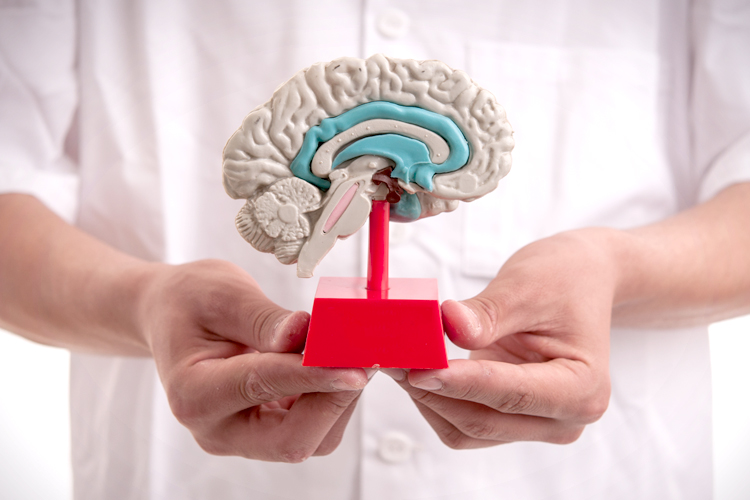 Enlarge(Credit: Axente Vlad via Shutterstock)